

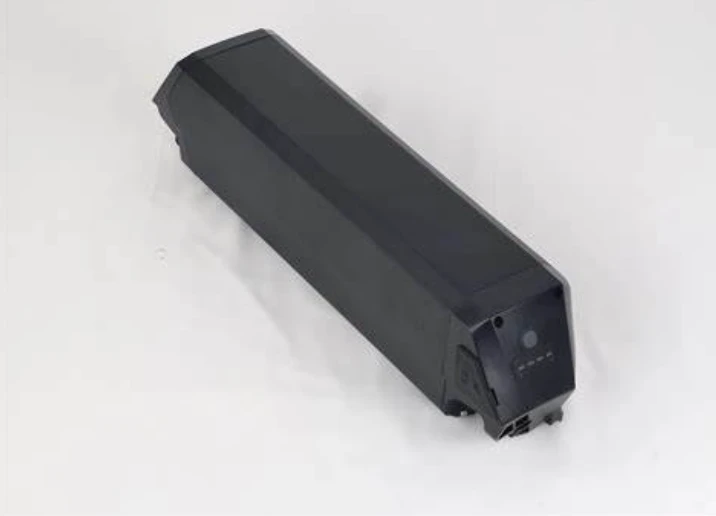
What is Power Bike Lithium Battery?
The Power Bike Lithium Battery uses lithium-ion cells, connected in series and parallel to form the voltage platform and capacity configuration required for the entire vehicle, and integrates a battery management system (BMS) to control voltage, current, and temperature. It is suitable for urban commuter bikes, sport-assisted bicycles, and mid-to-high power output models.
Benefits of Power Bike Lithium Battery
High Cyclic Recycling Capability
Under standard charge/discharge conditions, the battery can withstand over 1000 cycles. Capacity decay is related to changes in the positive and negative electrode material structures, and its lifespan is extended without relying on external compensation mechanisms.
Supports High Current Input
Standard charging current is 3–6A, with a charging time of approximately 3–6 hours. The charging rate is determined by the cell charging rate and BMS current limiting parameters.
Integrated BMS Protection Circuit
The built-in BMS samples the individual cell voltage, current, and temperature in real time. When parameters exceed the set range, the hardware circuit cuts off the circuit, providing overcharge, over-discharge, overcurrent, short circuit, and overtemperature protection.
Modular Structure Design
The battery adopts a modular series-parallel structure design, allowing for configuration adjustments based on vehicle voltage and capacity requirements, facilitating compatibility with different power ratings of vehicles.
Customization Options
Voltage and Capacity Configuration
Supports different voltage platforms (e.g., 36V, 48V) and capacity designs, allowing power and range requirements to be matched by adjusting the series and parallel connections.
Cell System Selection
LiFePO4 or ternary lithium-ion cells are available, with material selection based on vehicle weight requirements and cycle frequency.
BMS Function Settings
Supports setting charge/discharge cutoff voltage, current limit, and communication interface (CAN/UART) for data exchange with the vehicle control system.
Housing and Mounting Structure Development
Housing dimensions, mounting interfaces, and locking structures can be customized according to the vehicle frame structure to adapt to different installation locations.
Branding and Packaging
Supports housing marking printing, label information design, and customized shipping packaging.

FAQ
Q: How to determine if a battery is working properly?
A: A preliminary judgment can be made by measuring whether the output voltage is within the nominal range, and checking whether the connectors are loose or showing signs of oxidation.
Q: What should be checked if a battery cannot be charged?
A: Confirm that the charger's output voltage matches the specifications, check whether the connection terminals are making good contact, and if a voltage testing tool is available, check whether the battery terminal voltage is below the protection threshold.
Q: Is a decrease in battery capacity normal?
A: As the number of cycles increases, the electrode materials undergo structural changes, and the gradual decrease in capacity is a natural process of the electrochemical system.
Q: Can the battery be used in high or low temperature environments?
A: Extreme temperatures will affect the cell's internal resistance and chemical reaction rate. It is recommended to use the battery within the product's specified charge and discharge temperature range.
Hot Tags: power bike lithium battery, China power bike lithium battery factory, deep cycle golf cart battery, golf cart battery improvement, long duration energy storage, formwork for hvac work, affordable golf cart battery, ebike lithium battery maintenance standards


