

New Policy Regulations
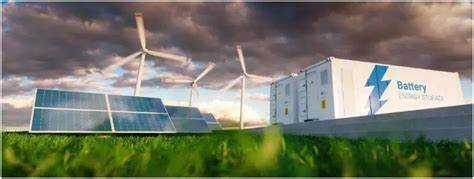
New German Regulations for Photovoltaic and Energy Storage Grid Connection
Effective February 1st, 2025, components and units of all photovoltaic power generation and energy storage systems in Germany must be registered in the "Unified Registration System for Units and Components" (ZEREZ). Otherwise, grid connection will be prohibited. The ZEREZ system is established based on the "Regulation on the Electrical Characteristics Certification of Energy Equipment" (NELEV) revised in May 2024, aiming to standardize the certification process and ensure the safe and stable operation of the power grid. The new regulations have different registration requirements for systems of different voltages. For low - voltage systems, only the inverter needs to be registered, while for medium - voltage, high - voltage, and extra - high - voltage systems, more components need to be included, and a full - system certification is required. After successful registration, the equipment will obtain a unique ZEREZ - ID. Operators can complete the certification verification by submitting this ID to the grid operator, which greatly simplifies the previous cumbersome and inconsistent approval process. As of January 2nd, although 827 certification documents have been entered into the ZEREZ system, the coverage is still incomplete, and the registration work of some grid operators is still in progress. To enhance the industry's awareness of the system, the German Wind Energy and Other Distributed Energy Promotion Association plans to hold a special online seminar on January 15th to facilitate the promotion of the system. ZEREZ official website: https://www.zerez.net/.
Access of Australian Virtual Power Plants to the Market
The Australian Energy Market Commission has issued a final resolution, allowing virtual power plants to participate in the electricity market and directly compete with large - scale generators. This reform aims to reduce system costs, cut carbon emissions, and thus relieve consumers' electricity costs. A new "dispatch mode" is introduced, enabling retailers to directly integrate resources such as virtual power plants, demand response, and aggregated batteries into the wholesale electricity market to improve market efficiency. At present, with the increasing popularity of batteries and electric vehicles in Australia, there is a lack of an effective prediction mechanism for the price - response of these resources, posing challenges to market operation. Anna Collyer, the chair of AEMC, stated that this reform has brought unprecedented transparency to the energy market, fully unleashing the potential for participation in energy supply and consumption. According to the commission's model prediction, this reform is expected to save A$834 million in costs from 2027 to 2050, and a A$50 - million incentive plan will be implemented to encourage market participation. The new framework will be officially implemented in May 2027, and the incentive plan will be launched in April 2026.
Japan's Tokyo Mandates Solar Panel Installation
Starting from April 2025, the Tokyo Metropolitan Government will officially implement a new regulation, requiring newly - built residential buildings to install solar panels to significantly reduce household carbon emissions. This bill was first proposed in September 2022, marking the first mandatory measure for single - family houses in Japan. According to the regulations, major residential construction companies are required to install solar panels on newly - built houses with a total floor area of less than 2,000 square meters, and the same applies to privately - built houses with an area of over 2,000 square meters. The Tokyo Metropolitan Government estimates that the initial cost of installing a 4 - kilowatt solar panel is approximately 980,000 yen. Through the income from selling surplus electricity back to the grid, the investment is expected to be recouped within 10 years. If government subsidies are available, the payback period can be shortened to 6 years. In addition, the policy plans to provide subsidies to landlords to further ease the financial burden on home - buyers. However, given the high housing prices in Tokyo, home - buyers are already under heavy financial pressure, and the mandatory installation of solar panels may further increase the cost of new houses. Whether this new policy can significantly increase the penetration rate of rooftop photovoltaics remains to be seen.
Extension of Tax Relief in São Paulo State, Brazil
The government of São Paulo State in Brazil has extended the ICMS (Circulation Tax on Goods and Services, one of the main state - level taxes in Brazil) tax - relief policy for distributed renewable energy generation until the end of 2026 through Decree No. 69,827. The continuation of this policy will further strengthen São Paulo State's leading position in the fields of sustainable development and photovoltaic energy. As an advantageous region for distributed photovoltaic power generation in Brazil, São Paulo State currently has a total installed capacity of over 5 GW, with more than 514,000 cumulative grid - connected and commissioned projects, covering various sectors such as residential, commercial, industrial, agricultural, and public buildings. Since 2012, distributed photovoltaic power generation has attracted more than 22.8 billion reais in investment in São Paulo State.
Amendment of Hungarian Energy Law
The Hungarian Parliament has recently passed a series of amendments to the Energy Law, focusing on supporting apartment residents to install solar systems. The amendments allow two or more apartment owners to form an energy community after signing an agreement, jointly install rooftop solar systems, share operation costs, and distribute benefits. This can not only effectively reduce the energy costs of apartment residents but also further increase the proportion of solar energy in Hungary's energy structure. In addition, to ensure the safety and data transparency of new energy systems, since July 2025, all newly - connected solar systems must be equipped with network - connected inverters to provide real - time power generation data for optimizing overall grid management. With the widespread promotion of network - connected inverters, Hungary may, for information security reasons, reduce the adoption of Chinese products or impose stricter restrictions on the access to background information and data management of related products of Chinese enterprises, which may affect the competitiveness of Chinese inverter products in the Hungarian market.
Hungary's Grid Digital Upgrade Plan
The Hungarian government has officially launched the "Digital Updating +" plan, investing 26.5 billion forints (approximately 484 million yuan) to support the digital upgrading of power distributors, aiming to more efficiently integrate renewable energy and optimize grid operation, and further promote the application and popularization of clean energy in the grid. The beneficiaries include major power companies such as E.ON, ELMÜ, MVM, and OPUS. These companies can apply independently or jointly, and the funding amount for a single project ranges from 500 million to 12 billion forints. The application channel will open on February 14th, 2025, and close on March 31st. All projects must be completed by the end of 2028. This plan focuses on enhancing the grid's data collection, monitoring, and analysis capabilities, promoting real - time monitoring and supply - demand balance, and alleviating the instability caused by weather - dependent renewable energy generation. At the same time, digital upgrading will also improve grid load management, energy flow monitoring, user experience, and network security performance, comprehensively optimizing grid management efficiency. It is worth noting that as Hungary's solar installed capacity has exceeded the original target of 6 GW for 2030, the Hungarian government has raised the national energy and climate plan target to 12 GW.
Romania's Clean Energy Capacity Plan
According to the latest news from the Romanian government, in 2025, Romania plans to add 2,500 MW of power generation capacity, including 1,200 - 1,500 MW of renewable energy power generation projects. These projects will be funded by the "National Recovery and Resilience Plan" (PNRR) and equipped with energy storage facilities. The Romanian government emphasizes that increasing power generation capacity and reducing market intervention are the keys to reducing electricity prices. These new capacities will significantly enhance national energy security and provide strong support for economic development. In the past decade, more than 7,000 MW of coal - fired and gas - fired power plants in Romania have been decommissioned, and the current daily instantaneous power generation in the country is between 7,000 - 8,000 MW.
Subsidy Measures
Subsidy for Enterprises in an Italian Region
The Friuli - Venezia Giulia region in Italy has launched a funding program with a total amount of 2.4 million euros, aiming to provide financial support for small and medium - sized enterprises in inland areas to install renewable energy self - consumption systems. The subsidy covers areas such as Alta Pusteria, Friuli Dolomiti, Campoformido, Tarvisio, and Isontina. The subsidy recipients include various industries such as manufacturing, construction, commerce, accommodation and catering, transportation and warehousing. Applicant enterprises are required to install photovoltaic or other renewable energy systems, as well as related energy storage equipment, intelligent management systems, and charging piles. The project investment amount must reach 20,000 euros. Each enterprise can receive a maximum subsidy of 300,000 euros and can apply for an advance payment of up to 70% in advance. In addition, an enterprise can only submit one application in each region, but if it has business premises in multiple regions, it can apply separately for different locations.
Subsidy for Photovoltaic and Energy Storage in Ontario, Canada
The Ontario government has announced the launch of two new energy - saving programs: the Home Energy Retrofit Program and the Small Business Energy - Saving Program. For energy - saving upgrade projects such as temperature control, insulation, heat pumps, rooftop solar, and energy storage systems, a subsidy of up to 30% of the cost will be provided. The subsidy for a single household will last for 6 years, and each household can receive an additional annual reward of 20 Canadian dollars. With the implementation of these two programs, the average annual investment in overall energy - saving projects will increase from the previous 342 million Canadian dollars to 900 million Canadian dollars.